What is FAFSA, and why shouldn't you miss this opportunity?
The dream of obtaining a higher education degree often comes with a daunting price tag that can deter even the most ambitious students. However, the United States government provides a critical bridge to close the gap between academic aspirations and financial reality. This bridge is known as the FAFSA, or the Free Application for Federal Student Aid. Every year, billions of dollars are distributed to students to help cover the cost of attendance at colleges, universities, and professional schools. Understanding this system is not just a clerical task; it is a strategic move to secure your financial future and minimize the burden of student debt.
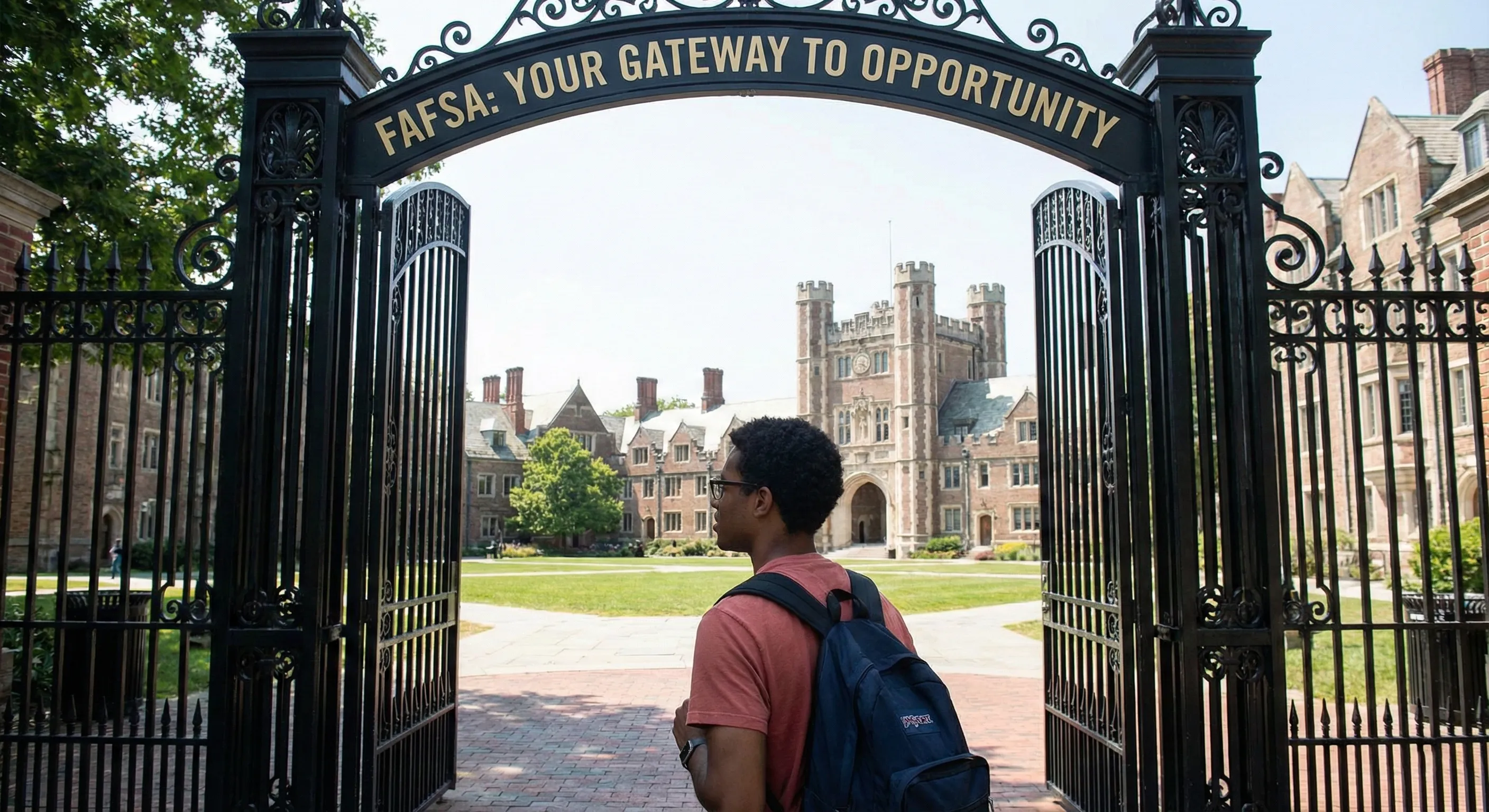
The Gateway to Higher Education: Understanding the FAFSA System
The FAFSA is the official form used by the U.S. Department of Education to determine a student's eligibility for federal financial aid. This comprehensive application collects data regarding a family’s income, assets, and household size to calculate the level of support a student requires. It serves as the primary gateway to a wide range of assistance programs, including need-based grants, work-study opportunities, and low-interest federal student loans. Without a completed application on file, a student is essentially invisible to the federal government’s massive aid distribution machine.
Beyond federal programs, the importance of this application extends to state governments and individual institutions. Most states use the data provided in the FAFSA to award their own state-funded grants and scholarships. Furthermore, almost every college and university in the country requires the form to determine a student's eligibility for "institutional aid"—money directly from the school’s own budget. Because this single form unlocks multiple levels of funding, missing out on the application means leaving thousands of dollars in potential support on the table.
Why the Name "Free" Matters
One of the most important aspects of the FAFSA is the first word in its name: Free. Students and parents should never pay a third party to file this form on their behalf. The official website, StudentAid.gov, provides a secure and cost-free environment to submit your data. By maintaining a direct relationship with the Department of Education, you ensure that your sensitive financial information is handled safely while avoiding unnecessary fees that could be better spent on textbooks or tuition.
A Financial Safety Net: Why Families of All Incomes Should Apply
A common and costly misconception is that the FAFSA is only meant for students from low-income backgrounds. In reality, the application acts as a universal safety net that benefits families across the entire economic spectrum. While high-income families may not qualify for need-based programs like the Pell Grant, they often remain eligible for unsubsidized federal student loans. These loans typically offer more favorable terms, fixed interest rates, and better consumer protections than private bank loans, making them a valuable tool for managing liquidity during the college years.
Furthermore, many colleges require a completed FAFSA as a prerequisite for awarding merit-based scholarships. Even if a student has a perfect GPA or exceptional athletic talent, a school might not release "non-need-based" funds unless the federal form is submitted. Additionally, family financial circumstances can change in an instant due to job loss, medical emergencies, or market volatility. Having a processed application on file allows the school’s financial aid office to move much faster in adjusting your aid package if a crisis occurs, providing an essential layer of security.
Timing is Everything: Navigating the FAFSA Opening Dates and Deadlines
In the world of financial aid, the early bird truly gets the worm. Historically, the application opened on October 1st each year, allowing students to align their financial planning with the college admissions cycle. However, recent changes under the Simplified FAFSA initiative have occasionally shifted these dates to later in the fall or early winter. It is crucial for students to monitor the official Federal Student Aid website for the exact "Go-Live" date to ensure they are among the first to submit their data.
The reason for this urgency is simple: many types of aid are distributed on a "first-come, first-served" basis. While the federal deadline for the application is technically June 30th of the academic year, most state and institutional deadlines occur much earlier—often in February or March. If you wait until the summer to file, the pool of available state grants and institutional scholarships may already be exhausted. By filing as soon as the window opens, you maximize your chances of receiving the largest possible aid package before the funds are spoken for.
Understanding the Three Tiers of Deadlines
- College/Institutional Deadlines: Often the earliest, sometimes as early as November or December for early decision applicants.
- State Deadlines: Varies by state; some are strictly date-based, while others end as soon as the money runs out.
- Federal Deadline: The final cutoff, usually June 30th, though this is far too late for most priority funding.
The FAFSA Simplification Act: How the Process Has Changed
The recent implementation of the Simplified FAFSA represents the most significant overhaul of the federal aid system in over forty years. This legislative change was designed to make the application faster and more accessible by drastically reducing the number of questions. One of the most impactful features is the direct data exchange with the IRS, which automatically retrieves your tax information and populates the form. This not only saves time but also reduces the risk of manual entry errors that could trigger a lengthy "verification" process.
Another major shift is the transition from the "Expected Family Contribution" (EFC) to the new Student Aid Index (SAI). This new formula is intended to be more transparent and generous for many applicants, particularly those with multiple children in college or those from lower-income households. While the change has caused some technical growing pains in recent cycles, the ultimate goal is to provide a more accurate reflection of a family's ability to pay, ensuring that the financial aid reaches those who need it most.
Essential Documentation: Gathering What You Need Before You Begin
Preparation is the key to a stress-free filing experience. Before you even log in, you should gather all necessary documents to ensure you can complete the form in one sitting. For the current cycle, you will need your Social Security Number (or Alien Registration Number), your driver’s license (if applicable), and records of untaxed income. Because the FAFSA uses "prior-prior year" tax data, you will specifically need your federal income tax returns and W-2s from two years ago—for example, the 2025-2026 form uses 2023 tax information.
In addition to tax records, you must account for your current assets. This includes the balance of your checking and savings accounts, as well as the net value of investments such as stocks, bonds, and real estate (excluding the home you live in). Under the new rules, the net worth of small businesses and family farms must also be reported. Having these numbers ready prevents the need to pause the application to dig through bank statements, which can lead to session timeouts and data loss.
The Critical Role of the FSA ID
The most vital "document" is actually your digital signature, known as the FSA ID. Both the student and at least one parent (the contributor) must create their own unique FSA ID using a verified email address and Social Security Number. It can take up to three days for the Social Security Administration to verify your identity, so you should create these accounts at least a week before you plan to start the application. Sharing an FSA ID is strictly prohibited and can lead to significant delays in processing.
Step-by-Step Guide: Completing Your Application with Confidence
The application process begins at StudentAid.gov, where you will log in using your FSA ID. The form is divided into several sections, starting with "Student Identity Information." Here, the student provides basic personal details. It is vital that these details match your Social Security card exactly; even a small typo in a middle initial or birth date can cause the system to reject the application. Accuracy in this first step ensures a smooth path through the remaining sections.
Once the identity section is complete, the form will guide you through "Student Circumstances" to determine if you are a dependent or independent student. Most undergraduates are considered dependent and must provide information about their parents. The new system uses a "Contributor" model, where the student "invites" their parent via email to complete the parent section. The parent then logs in with their own FSA ID to provide their financial data and, most importantly, provide "Consent and Approval" for the IRS to share their tax data.
Listing Your Schools
You can list up to 20 colleges or career schools on your online application. It is wise to list every school you are even remotely considering, as they cannot build a financial aid package for you until they receive your data. Don't worry about the order unless your state specifically requires it for state-grant eligibility; colleges cannot see the other schools you have listed, so there is no risk of "showing your hand" to admissions officers.
Beyond Federal Grants: Accessing State and Institutional Aid
While many students focus on the Pell Grant—which provides several thousand dollars in "free money" that does not need to be repaid—the FAFSA is also the key to unlocking state-specific opportunities. Many states have "Promise" programs or "Opportunity Grants" that can cover the remaining tuition balance at community colleges or state universities after federal aid is applied. These programs often have strict filing deadlines, making the timing of your FAFSA submission even more critical for local funding.
Furthermore, private colleges often have massive endowments used to attract talented students. They use the FAFSA (and sometimes a secondary form called the CSS Profile) to determine how much of a "tuition discount" they can offer you. This institutional aid can sometimes be so significant that a private university with a high "sticker price" ends up being cheaper than a public state school. Without your processed data, these schools have no way to measure your need or justify giving you a portion of their scholarship funds.
Evaluating Your Results: Understanding the FAFSA Submission Summary
After you submit your application, you will receive a document called the FAFSA Submission Summary. This is not an aid offer, but rather a report of the data you provided and an estimate of your eligibility. The most important number on this summary is your Student Aid Index (SAI). The SAI is a number that schools use to determine how much financial aid you're eligible for. A lower SAI indicates a higher level of financial need, which generally leads to more grant and scholarship offers.
The summary will also indicate if you are eligible for the Pell Grant and the maximum amount you might receive. If your summary contains errors or requires "Verification," you must act immediately. Verification is a process where the school's financial aid office asks for additional documentation to prove the accuracy of your form. While it can feel like an audit, it is a routine part of the process for many students. Completing verification quickly is essential, as schools will not disburse any money until the process is finalized.
Strategic Tips for Maximizing Your Potential Aid Eligibility
To get the most out of the FAFSA, you must understand how the formula treats different types of assets. For instance, money held in a student's name is "taxed" by the formula at a much higher rate (20%) than money held in a parent's name (up to 5.64%). If a student has significant savings, it might be strategic to use that money for necessary educational expenses before filing, or to move it into a parent-owned 529 college savings plan, which is treated more favorably by the SAI calculation.
Another tip is to avoid "income spikes" during the "base years" (the tax years used for the form). If a parent takes a large capital gain or a one-time retirement distribution, it can artificially inflate the family income and lower the student's eligibility for aid. If such a spike is unavoidable, you should contact the financial aid office at your chosen schools to explain the situation. They have the "professional judgment" authority to adjust your data if they believe the tax return does not accurately reflect your current financial situation.
Key Factors in the SAI Formula
- Parental Income: The largest driver of the index.
- Student Income: Higher protection allowance under the new rules.
- Non-Retirement Assets: Checking, savings, and investments are counted, but qualified retirement accounts (like 401ks) are not.
- Household Size: The number of people living in the home who receive more than half their support from the parents.
Conclusion: Securing Your Future Through Financial Empowerment
In conclusion, the FAFSA is much more than just a bureaucratic hurdle; it is a vital instrument of financial empowerment. By taking the time to understand the Student Aid Index, gathering your FSA ID and tax records, and meeting every deadline, you are taking active control of your educational journey. Whether you qualify for a full Pell Grant or simply want access to low-interest federal student loans, this application is the single most important document you will sign as a student.
The opportunity offered by the federal government and individual institutions is vast, but it is not automatic. It requires your initiative and attention to detail. Do not let the complexity of the forms or the fear of "making too much money" stop you from applying. Every year, millions of dollars in aid go unclaimed because students simply didn't file. Don't let that be your story. Complete your FAFSA early, stay informed about policy changes, and open the door to a future where your education is defined by your talent, not just your bank account.